Common areas are how tenants judge a building
Inside a unit, someone is responsible. In the hall, nobody is, and that is exactly where opinions get formed.
September 1, 2026 · 3 min read
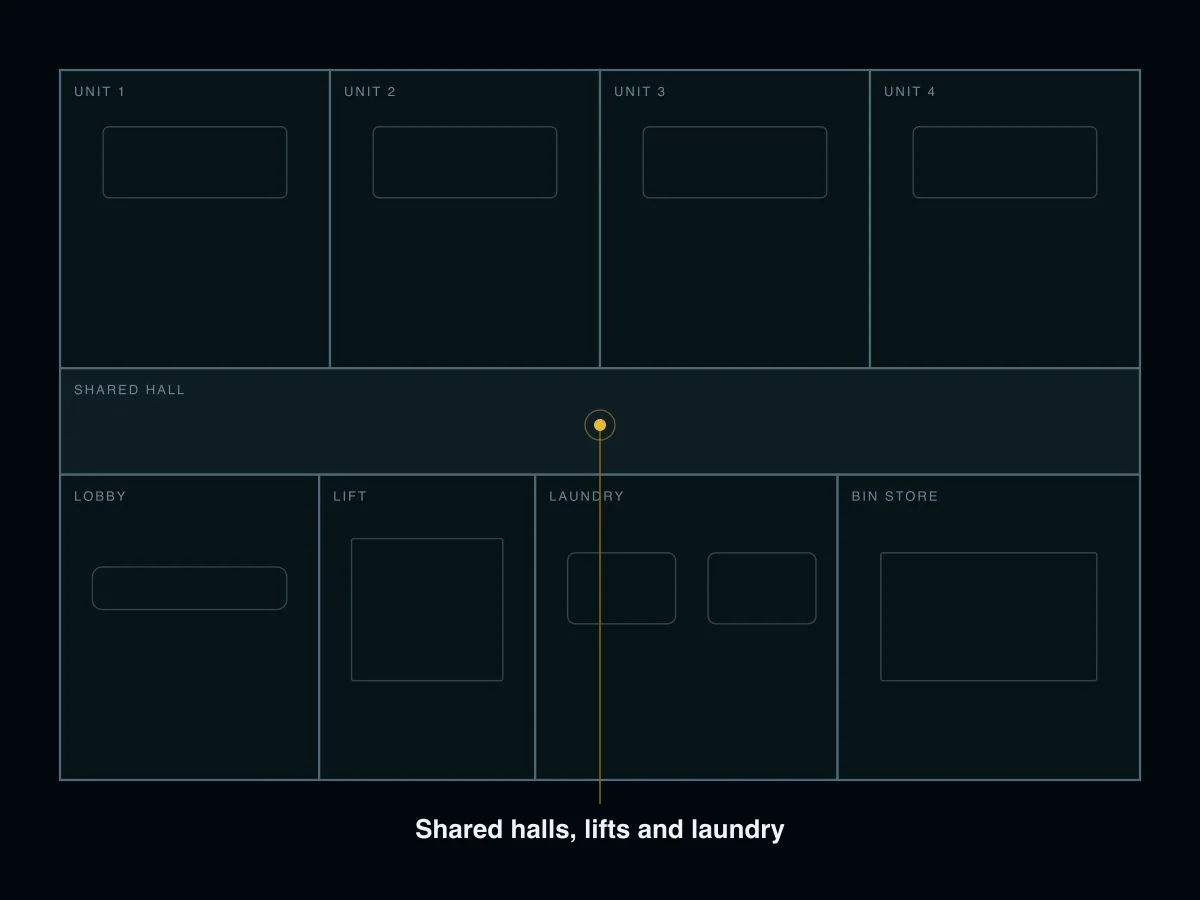
If you manage an apartment building or a condominium, you already know that most complaints are not about the units. They are about the spaces in between, and the reason is structural rather than cultural.
The ownership gap
Inside an apartment, responsibility is clear. Someone lives there, and the state of it is theirs. Step into the hall and that clarity disappears. The corridor is used by everyone and belongs to no one in particular, which means nobody has any private incentive to keep it right.
That is not a moral failing on anyone's part. It is just what shared space does. And it means the condition of the common areas is entirely a function of whatever maintenance regime you put in place, with nothing else propping it up.
They are also the tour
A prospective tenant sees the common areas before they see a single unit. The entrance door, the lobby, the corridor, the lift. By the time they are shown an apartment, they have already formed a working theory about how the building is run.
The unit can then confirm or slightly adjust that theory, but it rarely reverses it. Which makes the corridor, unglamorously, the highest leverage square footage in the building.
The four that take the most and get the least
- Entrance doors, both faces. The exterior face is touched by every single person who enters and is the one most often left out of a scope.
- Lift interiors and call panels. Constant contact, enclosed, and the one space where people have nothing to do but look at the walls.
- Laundry rooms. High humidity, heavy use, and a room where residents linger rather than pass through.
- Bin stores. Never inspected until they are a problem, at which point the problem is significant.
Why there is no quiet hour
An office empties. A clinic closes. A residential building does not. Someone is coming home at eleven and someone else is leaving at five in the morning, which means the common areas never get the undisturbed reset that a commercial building gets every single night.
Practically, that argues for a fixed, predictable round rather than an occasional deep clean. Consistency beats intensity in a space that is continuously in use, because you are managing a rate of accumulation rather than clearing a backlog.
The same crew matters more here
In a residential setting there is a second reason to want continuity, which is that residents will see the cleaner. Somebody unfamiliar in the corridor at nine in the evening is a small anxiety in a way that it simply is not in an empty office.
That is the practical argument for visible photo ID badges and for screening staff before they ever reach orientation. It is not only about protecting the building. It is about the resident who passes someone in the hall and can tell at a glance who they are and why they are there.
What to put in the scope
Name the four spaces above explicitly rather than relying on the phrase common areas to carry them. Set the frequency against actual traffic, which usually means the lobby and lift more often than the upper corridors. And agree what happens to the bin store on a schedule rather than on request.
Done that way, the common areas stop being the thing you hear about and become the thing that quietly makes the building easy to let.
Great Lakes Janitorial Services, (651) 253-2239
Call (651) 253-2239More articles
What a nightly office clean actually covers
The open floor is the easy part. The scope that decides whether a contract lasts is everywhere else.
How to compare commercial cleaning quotes without getting caught out
The number at the bottom is the least useful part of the page. Here is what to read instead.